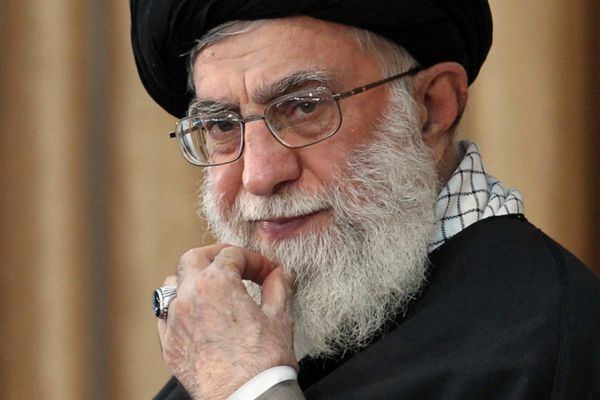
The Islamic Republic of Iran is preparing for a monumental event that will undoubtedly shape its immediate future and legacy: the burial of its long-serving Supreme Leader, Ayatollah Ali Khamenei. Following his recent passing, which reportedly occurred amidst a wave of US-Israeli attacks, the nation is poised to observe a period of profound mourning and transition. Confirming earlier reports, Iranian news agencies, including Fars, have stated that Ayatollah Khamenei's final resting place will be the holy city of Mashhad in northeastern Iran, a location deeply significant both personally and spiritually for the late leader and the nation.
This decision underscores a carefully orchestrated plan that balances national mourning with religious reverence. While the exact date for the burial remains undisclosed, it has been confirmed that a grand memorial ceremony will first be held in the capital, Tehran, allowing for a national farewell before the revered leader embarks on his final journey to his ancestral home. The passing of Ayatollah Khamenei, who led Iran for 36 years until his death at 86, marks the end of an era and ushers in a period of intense focus on the succession process and the broader implications for Iran's domestic and foreign policies.
Mashhad: A Sacred Resting Place for a Supreme Leader
The choice of Mashhad as Ayatollah Khamenei's burial site is laden with profound symbolism and historical significance. Mashhad, Iran's second-largest city, is not merely his birthplace but also one of the holiest cities in Shia Islam, home to the revered Shrine of Imam Reza, the eighth Shia Imam. This sacred complex is a major pilgrimage destination for millions of Shia Muslims worldwide, making it an epicentre of spiritual devotion and a beacon of Iranian identity.
For Ayatollah Khamenei, the connection to Mashhad runs even deeper. It is where his father is also buried within the Imam Reza shrine complex, cementing a personal and familial link to this holy ground. The decision to inter him in Mashhad signifies a return to his roots, a final spiritual journey to a place intrinsically tied to his personal history and the collective faith of his followers. It ensures that his legacy will forever be intertwined with one of Shia Islam's most hallowed sites, making his tomb a potential future pilgrimage spot for devotees.
Being buried in Mashhad, particularly near the Imam Reza shrine, carries immense spiritual weight. It allows for eternal proximity to a revered Imam, a blessing sought by countless devout Muslims. For the Iranian populace, this choice resonates deeply with their religious values, providing a sense of continuity and spiritual solace during a period of national grief. It transforms a political transition into a deeply spiritual event, reinforcing the religious foundations of the Islamic Republic. To delve deeper into the profound reasons behind this choice, explore Mashhad: Why Iran's Second City Is Khamenei's Final Resting Place.
The Grand Farewell: Tehran Ceremony Precedes Final Journey
Before Ayatollah Khamenei is laid to rest in the hallowed ground of Mashhad, Iran's capital, Tehran, will host a "large memorial ceremony," a grand national farewell befitting a Supreme Leader. This two-stage process—a public ceremony in the political heart of the nation followed by a spiritual burial in his hometown—is a meticulously planned sequence designed to achieve several critical objectives.
The Tehran ceremony will serve as a powerful display of national unity and a collective expression of mourning. It will allow millions of Iranians, alongside foreign dignitaries, to pay their respects to the late leader in the capital city that served as the nerve centre of his 36-year rule. Such an event is crucial for consolidating national sentiment, demonstrating the continuity of the state, and allowing the interim leadership to project stability and strength during a sensitive transition. The Revolutionary Guards, via their Telegram account, confirmed the upcoming "large farewell ceremony," indicating the extensive security and logistical planning involved.
The strategic choice to hold the primary public mourning event in Tehran before the burial in Mashhad highlights the dual nature of Khamenei's role: a political head of state and a spiritual guide. The Tehran ceremony will likely be a somber yet grand affair, showcasing the depth of national grief and the institutional framework of the Islamic Republic. This provides an opportunity for the global community to witness the organized transfer of power and the nation's adherence to its constitutional processes, even amid reported external pressures and internal security concerns. For a detailed look at the significance of this two-part farewell, read more about Khamenei Burial in Mashhad to Follow Tehran Farewell Ceremony.
Navigating the Succession: Iran's Path Forward
With the death of Ayatollah Ali Khamenei, Iran enters a critical period of leadership transition, guided by its constitutional framework. Power has been temporarily entrusted to a three-man interim council, designed to ensure stability until a permanent successor is elected. This council typically comprises the President, the Head of the Judiciary, and a jurist from the Guardian Council – the powerful body responsible for overseeing legislation and vetting electoral candidates.
The ultimate responsibility for electing a new Supreme Leader falls to the Assembly of Experts, an 88-member body of high-ranking clerics. This assembly typically meets in the holy city of Qom, south of Tehran, though its main headquarters are in the capital. The process of selecting a new Supreme Leader is one of the most significant and sensitive constitutional duties in Iran, often conducted behind closed doors to ensure a consensual choice and maintain national unity.
However, the transition is complicated by the circumstances surrounding Khamenei's death and heightened regional tensions. Iranian media has reported that buildings housing the Assembly of Experts in both Qom and Tehran were recently targeted by US-Israeli strikes. These events have introduced significant security concerns, with Fars news agency citing an official familiar with the process, reporting that "for security reasons," the Assembly's final meeting to elect a successor could be postponed until after Khamenei's burial. This potential delay underscores the extraordinary precautions being taken to safeguard the integrity of the succession process and protect the Assembly members during an extremely volatile period. The interim council's immediate task is not only to manage the state's affairs but also to ensure a smooth, secure, and legitimate environment for the Assembly of Experts to fulfill its constitutional mandate.
Implications and Unanswered Questions
The confirmed burial of Ayatollah Khamenei in Mashhad, preceded by a grand ceremony in Tehran, sets the stage for a period of immense national and international scrutiny. The absence of a disclosed date for the burial leaves several critical questions pending, likely reflecting the complex logistical and security challenges at play. The reported US-Israeli strikes on buildings associated with the Assembly of Experts further amplify the security concerns, potentially influencing the timing of both the burial and the crucial succession meeting.
The passing of a leader who governed for 36 years inevitably creates a power vacuum and generates uncertainty. Domestically, Iran grapples with the task of preserving stability, managing public sentiment, and ensuring a seamless transfer of power, all while under the shadow of external pressures. The nature of the succession—whether it results in a strong, singular figure or a more collective leadership—will define Iran's trajectory in the coming decades.
Regionally and internationally, Khamenei's death sends ripples through an already volatile Middle East. His successor will inherit a complex web of geopolitical challenges, including ongoing tensions with the United States and Israel, the nuclear program, and proxy conflicts across the region. The world watches keenly to see how Iran's new leadership will navigate these challenges and whether there will be any significant shifts in foreign policy. The upcoming weeks will be crucial for understanding the immediate future of the Islamic Republic and its place in the global order.
The confirmation of Ayatollah Ali Khamenei's burial in the holy city of Mashhad, following a significant farewell ceremony in Tehran, marks a pivotal moment for Iran. This strategic decision to inter the late leader in his revered hometown, a spiritual heartland, reflects a careful balance between national mourning, religious tradition, and political continuity. As the nation prepares for this momentous event, the complexities of the succession process, particularly in light of heightened security concerns and external pressures, underscore the profound challenges that lie ahead. Iran stands at a crossroads, navigating a transition that will undoubtedly shape its destiny and redefine its role on the global stage for years to come.