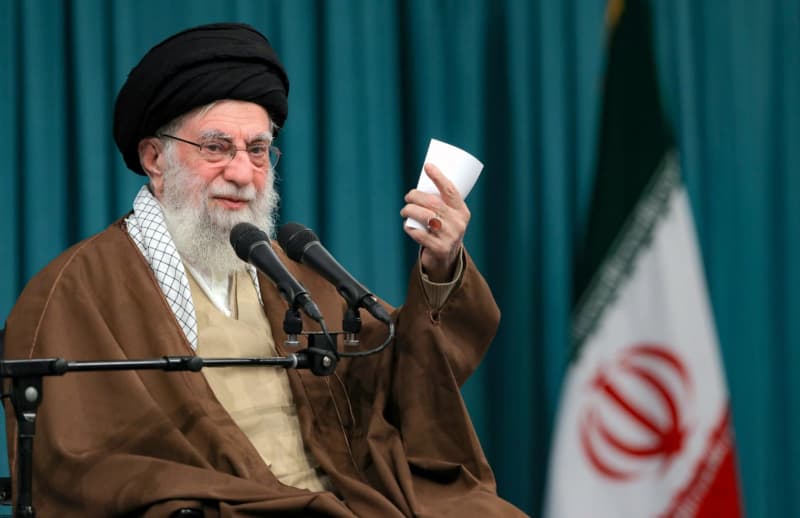
A National Farewell: Tehran Ceremony Precedes Mashhad Burial
The Islamic Republic of Iran is preparing for a period of national mourning and transition following the death of its Supreme Leader, Ayatollah Ali Khamenei. While the final resting place for Khamenei has been officially confirmed as the holy city of Mashhad, the nation's spiritual heartland, a grand farewell ceremony is scheduled to take place first in the capital, Tehran. This two-phase approach underscores the immense national and religious significance of the late leader, allowing for a comprehensive public tribute before his ultimate interment.
The decision to hold a major ceremony in Tehran reflects the city's status as the political and administrative center of Iran. It is here that heads of state, foreign dignitaries, and millions of Iranian citizens are expected to gather to pay their respects. Such events are meticulously organized, serving not only as a display of national unity and respect for the departed leader but also as a symbolic transfer of power and a reaffirmation of the country's direction. For many, it will be an opportunity to participate in a historic moment, witnessing the rituals that accompany the passing of a figure who guided Iran for over three decades.
Following Khamenei's death, an interim council has been formed to manage the country's affairs until a successor is elected by the Assembly of Experts. This council includes the president, the head of the judiciary, and a jurist from the Guardian Council, ensuring continuity in governance during this critical period. The Tehran ceremony will likely be a public display of this interim leadership, signaling stability amidst transition.
The Deep Symbolism of a Dual Ceremony
The choice of a dual ceremony – a public farewell in Tehran followed by burial in Mashhad – is rich with cultural and political symbolism. Tehran, as the nation's capital, is the stage for national spectacle and political statements. It is where Iran projects its image to the world and where its leadership engages with global affairs. The ceremony here will be a powerful demonstration of state protocol and national unity.
Mashhad, on the other hand, represents a return to roots, spiritual sanctity, and personal heritage. It signifies a profound connection to the values and history that underpin the Islamic Republic. This deliberate sequence ensures that both the national and spiritual dimensions of Ayatollah Khamenei's legacy are honored appropriately. It allows for a broad, inclusive farewell at the national level, followed by a more intimate, spiritually charged interment in the city that held deep personal meaning for him.
Mashhad: A City Steeped in History and Spiritual Significance
The selection of Mashhad as the final resting place for Ayatollah Ali Khamenei is deeply significant, intertwining his personal history with the spiritual bedrock of Iran. Mashhad, Iran's second-largest city and a beacon of Shia Islam, holds profound importance not only for its historical ties to the late leader but also for its spiritual aura. It is a decision that speaks volumes about Khamenei's identity and the values he championed.
Why Mashhad? A Return to Roots and Sacred Ground
According to Iranian news agencies like Fars, a key reason for the choice of
Mashhad: Why Iran's Second City is Khamenei's Final Resting Place is Khamenei's deep personal connection to the city. He was originally from Mashhad, a detail that underscores a profound sense of belonging and heritage. Furthermore, his father is also buried there, specifically at the revered Imam Reza shrine. This familial link to such a sacred site makes Mashhad a natural and fitting choice for his interment, ensuring he rests among his ancestors in a place of immense spiritual power.
The Imam Reza shrine complex is not merely a burial ground; it is one of the holiest sites in Shia Islam, attracting millions of pilgrims annually from across the globe. It houses the tomb of Imam Reza, the eighth Imam of Shia Islam, making Mashhad a focal point for spiritual devotion, pilgrimage, and religious scholarship. For a Supreme Leader who personified the theological and political leadership of the nation, being laid to rest in such a hallowed place elevates his spiritual standing and reinforces his connection to the foundational principles of Shia Islam.
The Spiritual Resonance of Imam Reza Shrine
Burying Ayatollah Ali Khamenei within the vicinity of the Imam Reza shrine or within Mashhad itself, bestows an unparalleled spiritual resonance upon his final resting place. Pilgrims visiting the shrine for generations to come will be reminded of the leader who served for 36 years, bridging his leadership with the eternal spiritual legacy of the Imams. This decision aligns with the tradition of burying esteemed religious figures in proximity to holy sites, seeking blessings and ensuring their memory remains intertwined with the faith. The act strengthens the bond between the leadership and the populace's spiritual identity, reaffirming the religious legitimacy of the state.
The Path to Succession and Regional Implications
The death of a Supreme Leader inevitably ushers in a period of political transition, and this instance is no different. The immediate formation of an interim council highlights the established protocols for succession, designed to ensure stability. However, the context surrounding Khamenei's death adds layers of complexity to this process, with significant implications both domestically and across the region.
Reports from Iranian news agencies indicate that Khamenei's death at 86 followed a period of intense regional hostilities. Some Iranian media outlets, including Fars, have explicitly attributed his demise to "US-Israeli attacks on Saturday," framing it within a broader narrative of conflict. This highly sensitive claim, if widely accepted within Iran, could significantly influence public sentiment and future policy decisions, potentially hardening attitudes towards external adversaries.
Navigating the Assembly of Experts and Security Concerns
The process of electing a new Supreme Leader rests with the Assembly of Experts, an 88-member body of high-ranking clerics. This assembly is tasked with deliberating and ultimately selecting Khamenei's successor. However, the transition has been marked by reported security concerns. Iranian media has cited officials suggesting that, "for security reasons," the Assembly's final meeting could be postponed until after Khamenei's burial. Further, reports have emerged of buildings housing the Assembly of Experts in Qom and its main headquarters in Tehran being reportedly hit in recent strikes.
These alleged incidents, if confirmed, underscore the fragile security environment and the potential challenges the interim leadership faces in ensuring a smooth and legitimate succession process. The Assembly's ability to convene, deliberate, and make its crucial decision unimpeded is vital for maintaining national cohesion and political legitimacy. Any perceived external interference or security threats could complicate the process and potentially influence the outcome or the perception of its validity.
Tips for Understanding Iran's Political Landscape during Transition:
- Monitor Official Announcements: Rely on official Iranian state media and recognized international news organizations for updates on the succession process and burial arrangements.
- Analyze Statements Carefully: Pay close attention to the language used by Iranian officials, as it often conveys subtle shifts in policy or national sentiment.
- Consider Regional Reactions: Observe how neighboring countries and global powers react to the transition, as this can offer insights into potential geopolitical shifts.
- Look Beyond the Immediate: The election of a new Supreme Leader is a long-term process with implications for Iran's domestic policies, foreign relations, and regional role for decades to come.
Navigating an Undisclosed Timeline
A notable aspect of the current situation is the undisclosed date for Ayatollah Ali Khamenei's burial in
Ayatollah Khamenei's Burial Confirmed for Holy Mashhad. While the location and the preceding Tehran ceremony have been announced, the specific timeline for the Mashhad interment remains unspecified. This lack of a firm date is not uncommon in high-stakes national transitions and can be attributed to a confluence of factors.
Factors Influencing the Burial Timeline:
*
Logistical Complexity: Organizing a multi-city national farewell and burial for a figure of Khamenei's stature involves immense logistical planning, including security, crowd control, and coordination of dignitaries.
*
National Mourning Period: Establishing an appropriate period of national mourning, allowing citizens to grieve and participate in ceremonies, often requires flexibility in timing.
*
Political Sensitivity: The timing might also be influenced by the ongoing process of selecting a successor. It could be deemed prudent to conclude the funeral rites before the Assembly of Experts makes its final decision, or conversely, to wait until certain political consultations are complete.
*
Security Considerations: In the current geopolitical climate, security would be a paramount concern for an event drawing potentially millions of attendees. The interim government would need to ensure maximum security measures are in place before announcing a definitive date.
The interim government's careful management of this timeline will be crucial in demonstrating control and ensuring a respectful and orderly transition. It suggests a methodical approach to a sensitive period, aiming to balance public participation with security and political stability.
Conclusion
The upcoming farewell ceremony in Tehran and the subsequent burial of Ayatollah Ali Khamenei in Mashhad mark a pivotal moment in Iran's history. This meticulously planned dual event reflects the immense national significance and spiritual legacy of a leader who governed for 36 years. The choice of Mashhad, his birthplace and home to the revered Imam Reza shrine, underscores his deep personal connection to the spiritual heartland of Iran. As the nation navigates the complexities of succession, with an interim council in place and the Assembly of Experts facing crucial decisions amid reported security concerns, the world watches closely. The careful handling of these ceremonies and the eventual selection of a new Supreme Leader will undoubtedly shape Iran's trajectory in the coming decades, reinforcing national unity while honoring the profound spiritual and political impact of Khamenei's tenure.